
Minimally invasive endoscopy providing direct visualization of the paranasal sinuses in cases of nasal discharge or chronic inflammation.
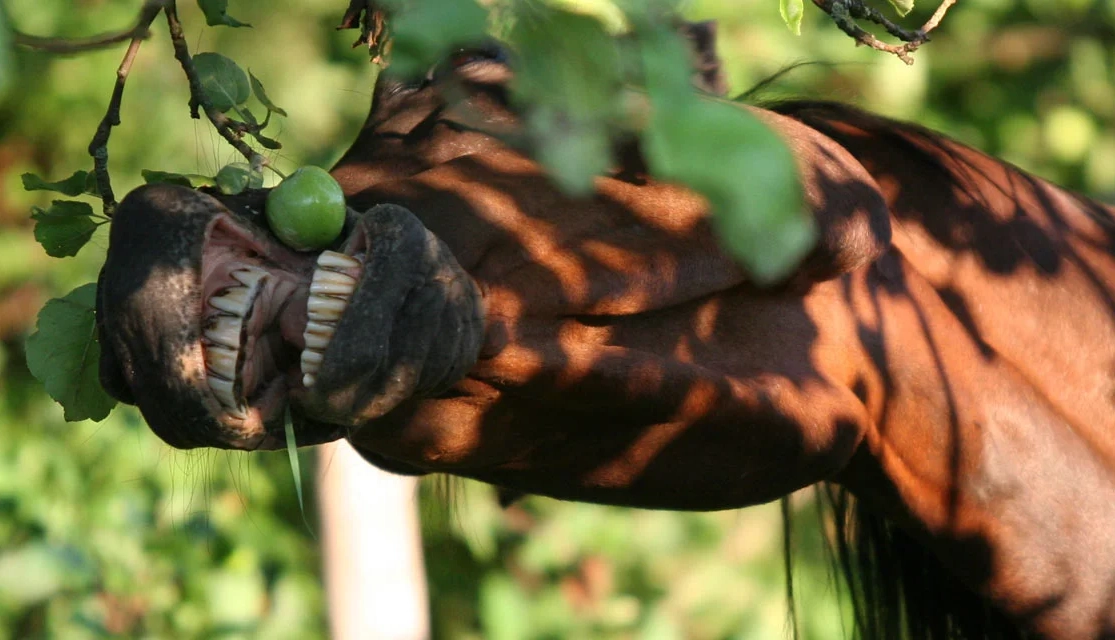
Sinus endoscopy enables direct assessment of the complex air filled spaces within the horse’s head.
It is used to investigate:
The horse is sedated for the procedure, and the nasal passage is locally anesthetized to ensure a calm and safe examination. In many cases, access via the natural nasal passages is sufficient. In selected situations, a small surgically created opening may be required.
Sinus endoscopy provides valuable information about:
It also allows targeted sampling such as lavage or biopsies and supports planning of further therapeutic measures.
As a minimally invasive procedure, it is a key element of modern diagnostics for equine sinus disease.
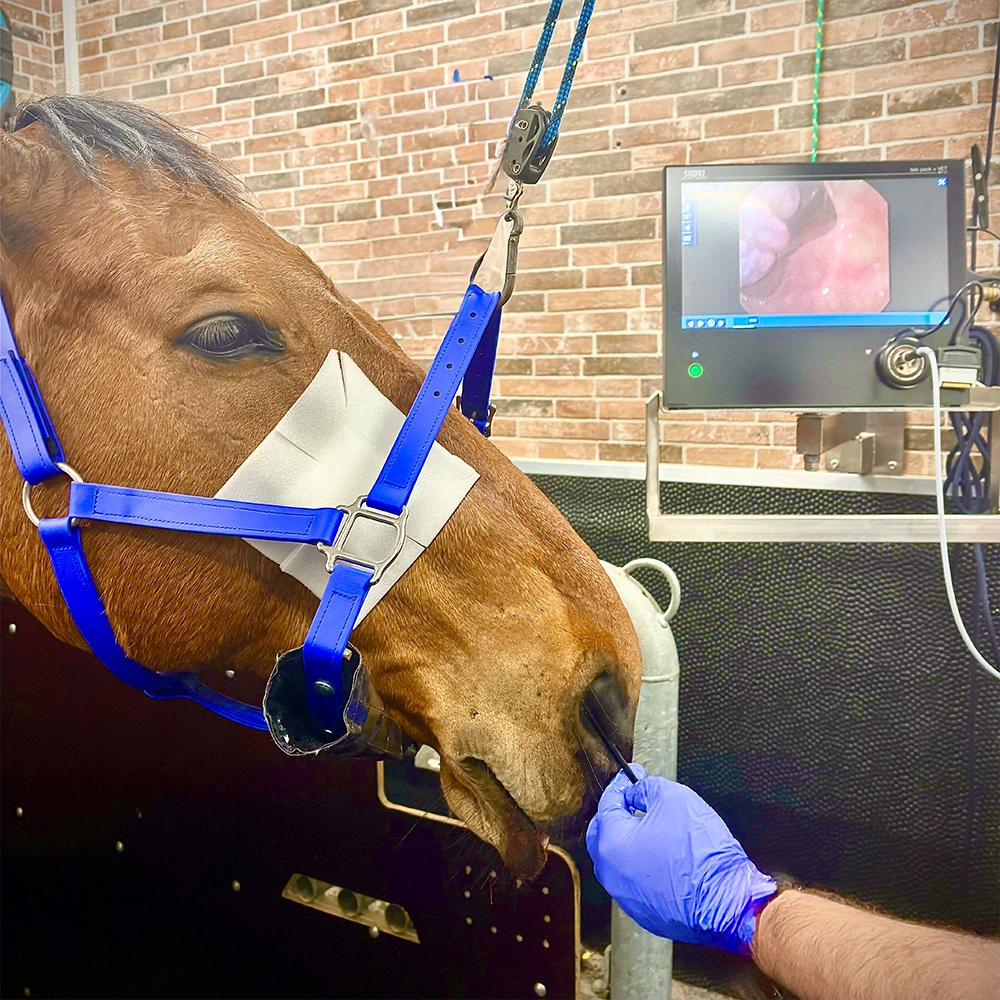
Sinus endoscopy
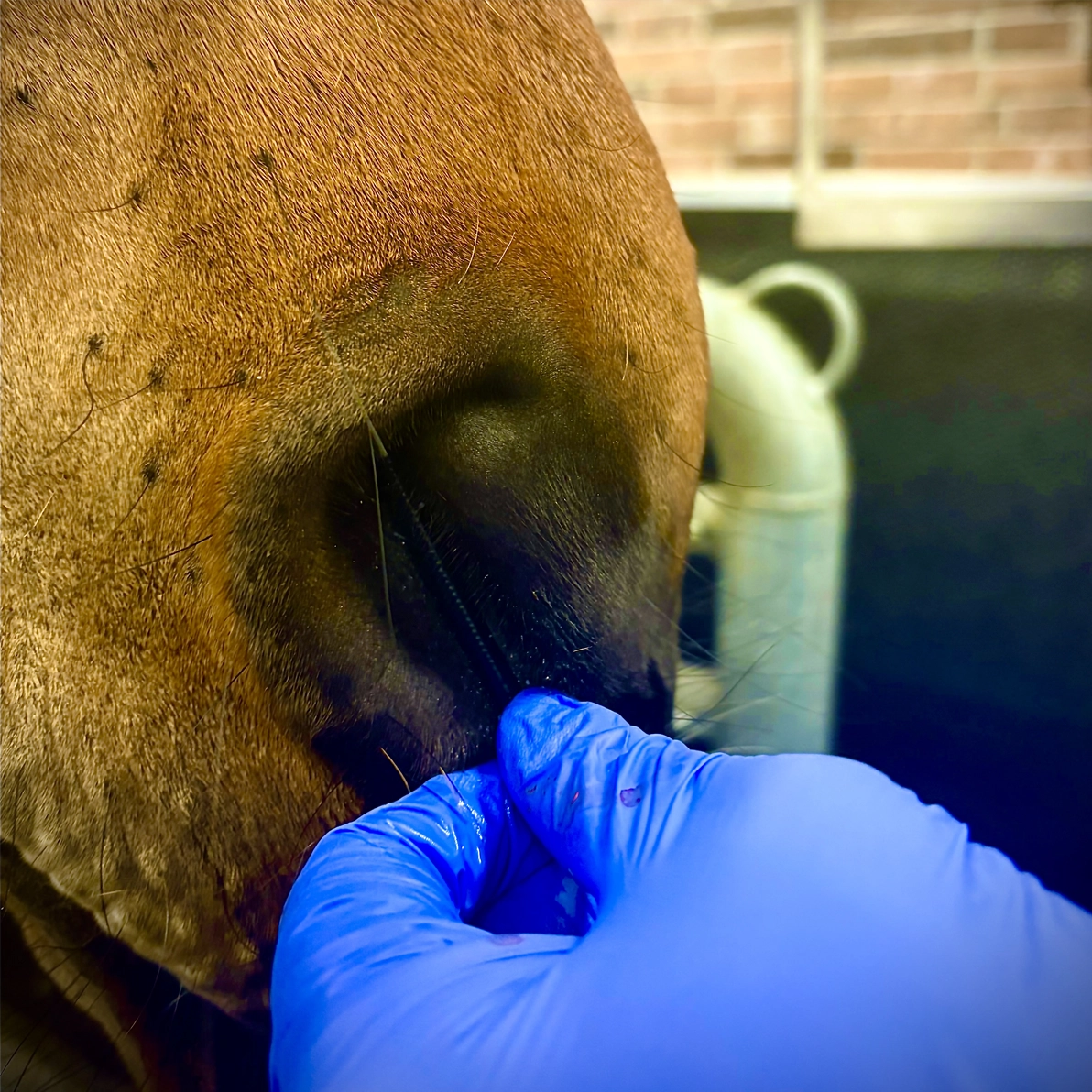
Sinus endoscopy
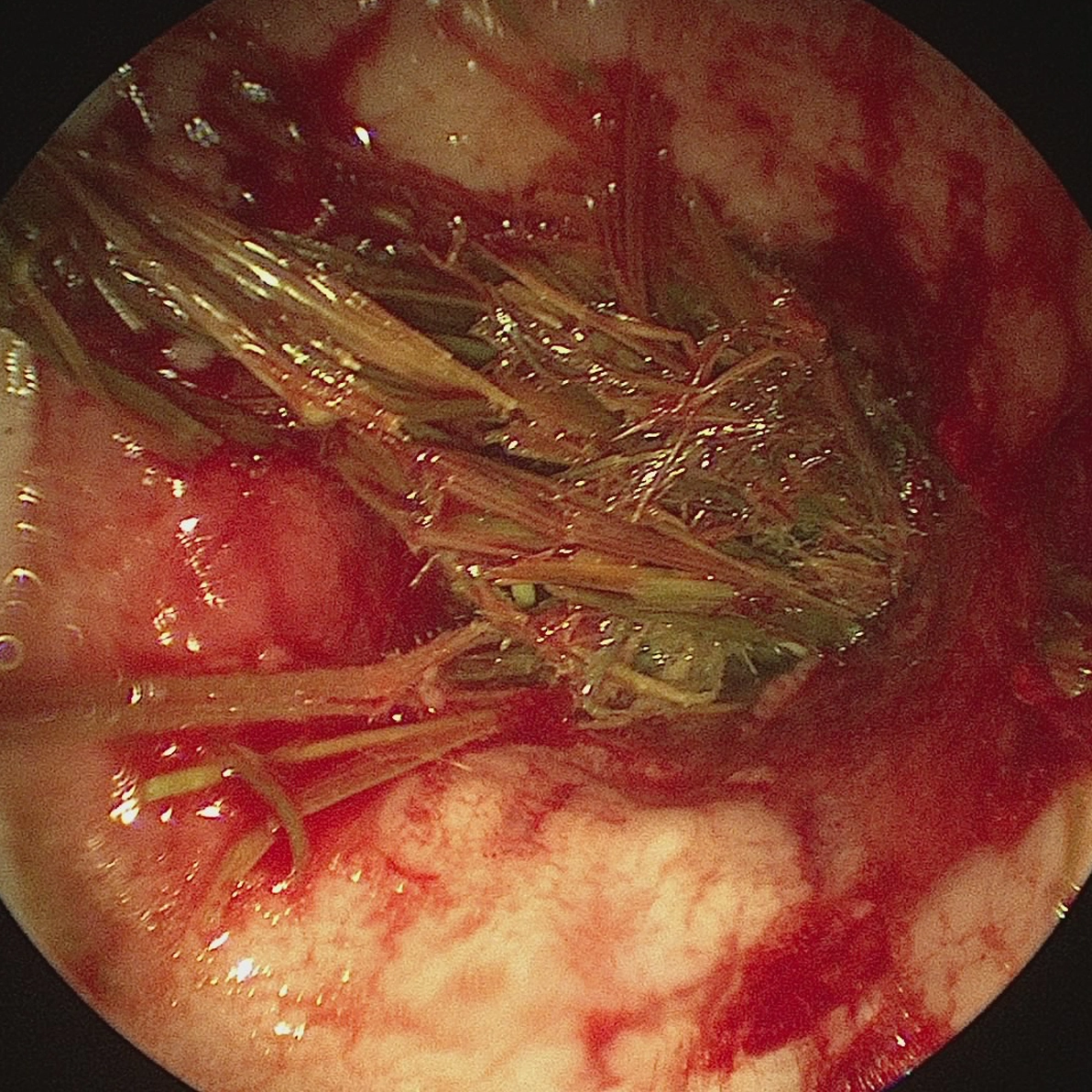
Feed in a fistula

Board certified equine veterinarian specializing in dental and sinus surgery with extensive experience in complex referral cases.

Specialist in equine dentistry with a focus on orthodontics, tooth preservation, implantology, and complex occlusal correction.

Equine veterinarian specializing in equine dentistry with a focus on sinus endoscopy and dental and head surgery.

Equine veterinarian specializing in dental treatment and occlusal correction with a strong focus on functional dentition analysis.

Equine veterinarian specializing in equine dentistry with a focus on occlusal correction, diagnostics, and incisor therapy.

Board certified equine surgeon with a focus on tooth preserving procedures, endodontics and minimally invasive extractions.

Board certified equine specialist focused on dentistry, rehabilitation and chiropractic care.
